
Projects
Read the story of a few projects, then browse all of them. Every project has its own page.
Highlight
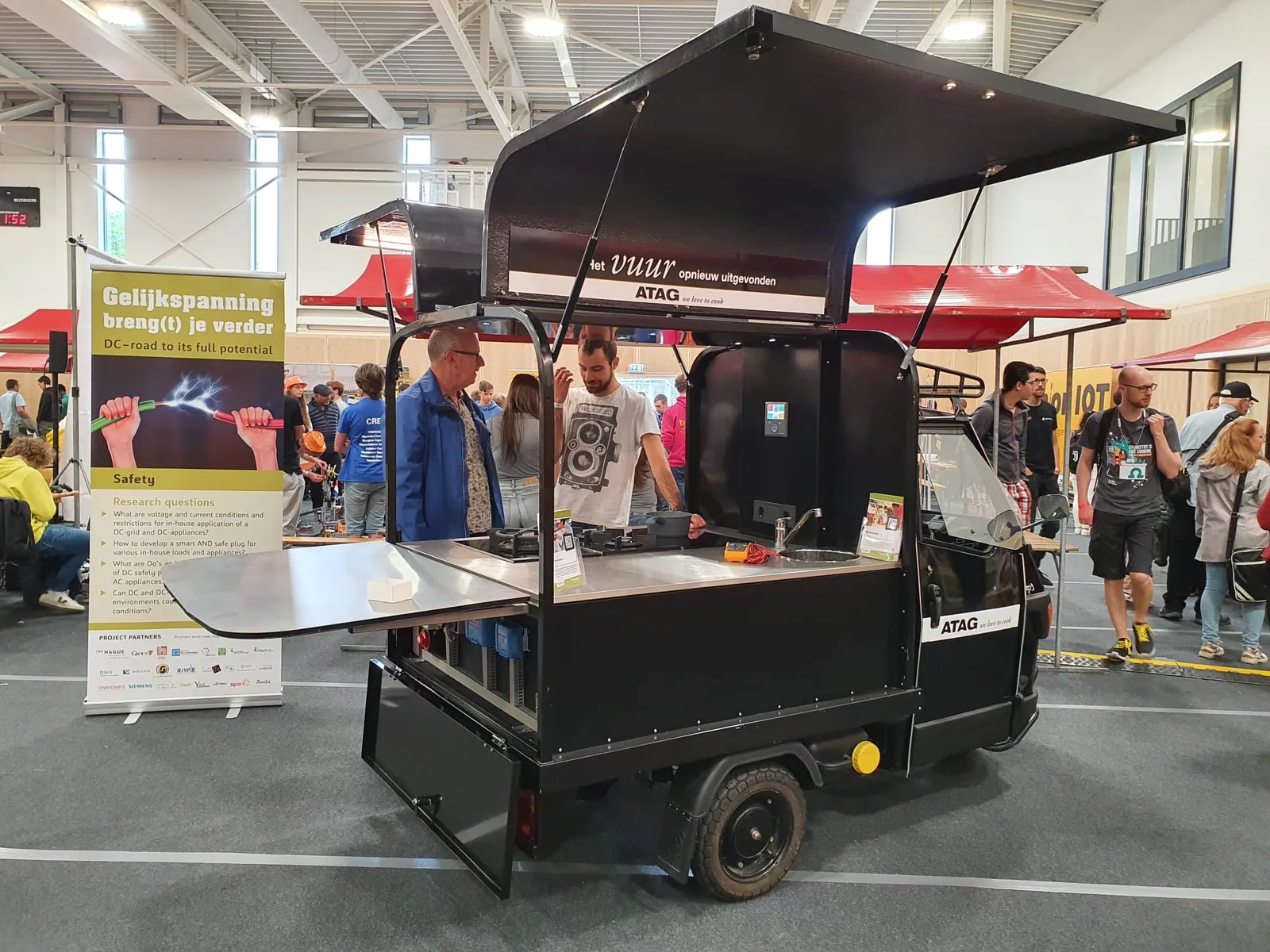
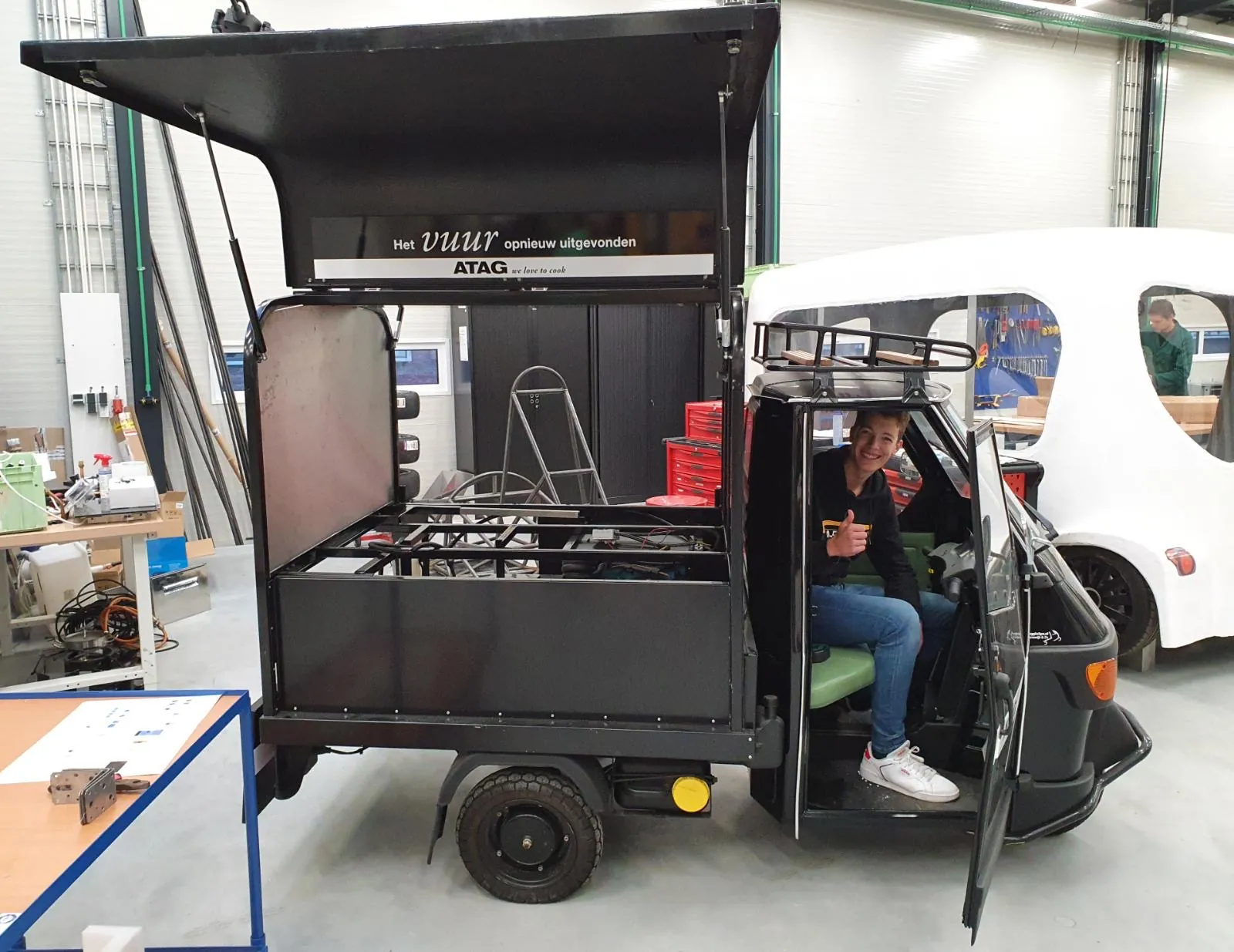
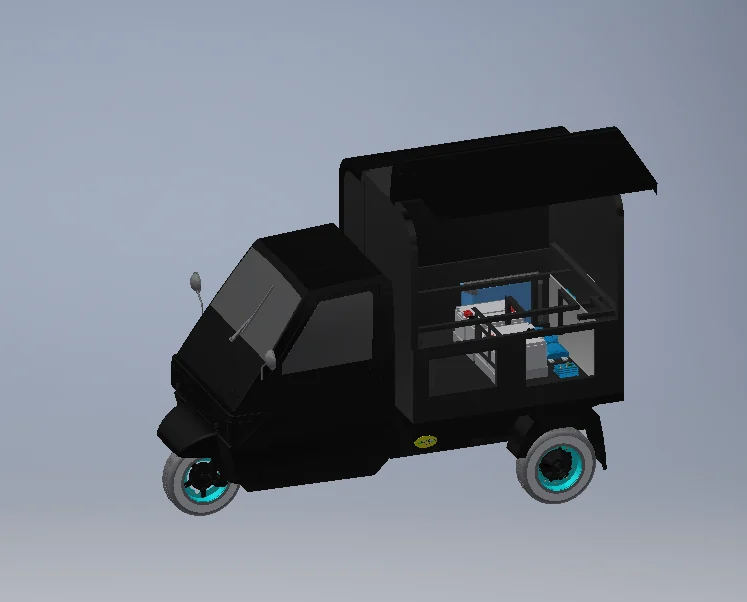
The TukTuk that cooks
on its own sun
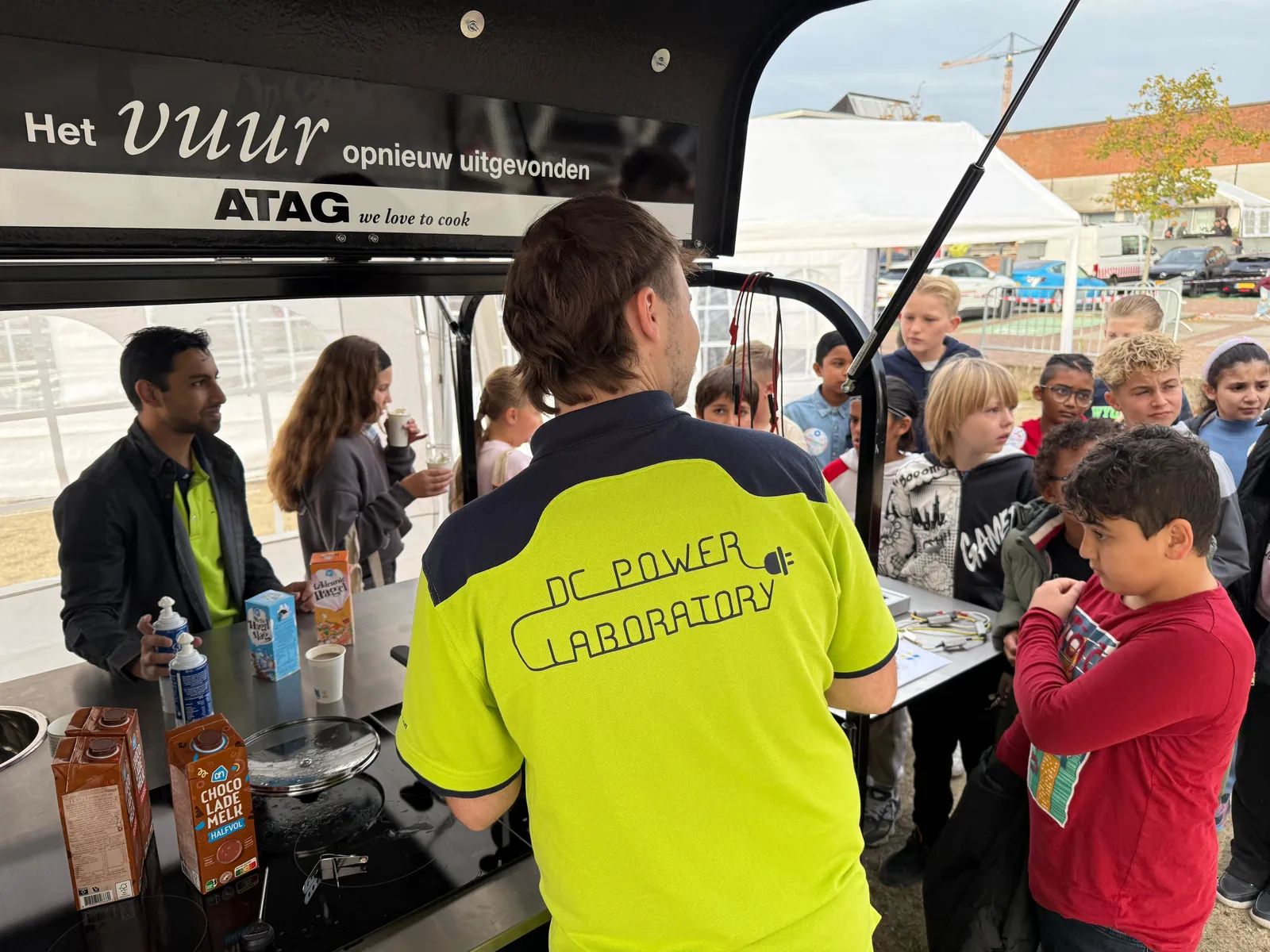
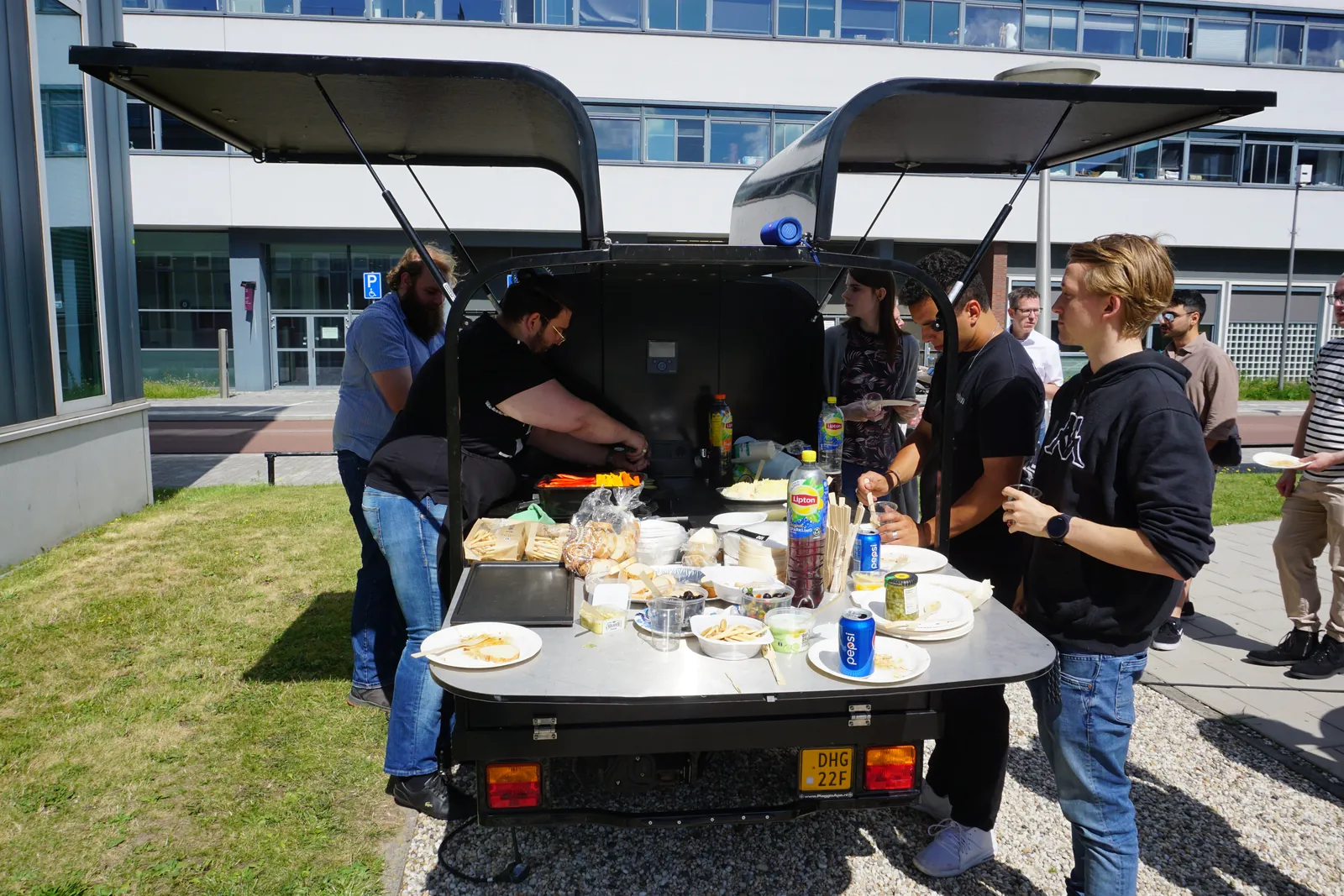
The Self-Sustainable TukTuk makes, stores and uses its own energy. The lab takes it outside, to cook and to teach.
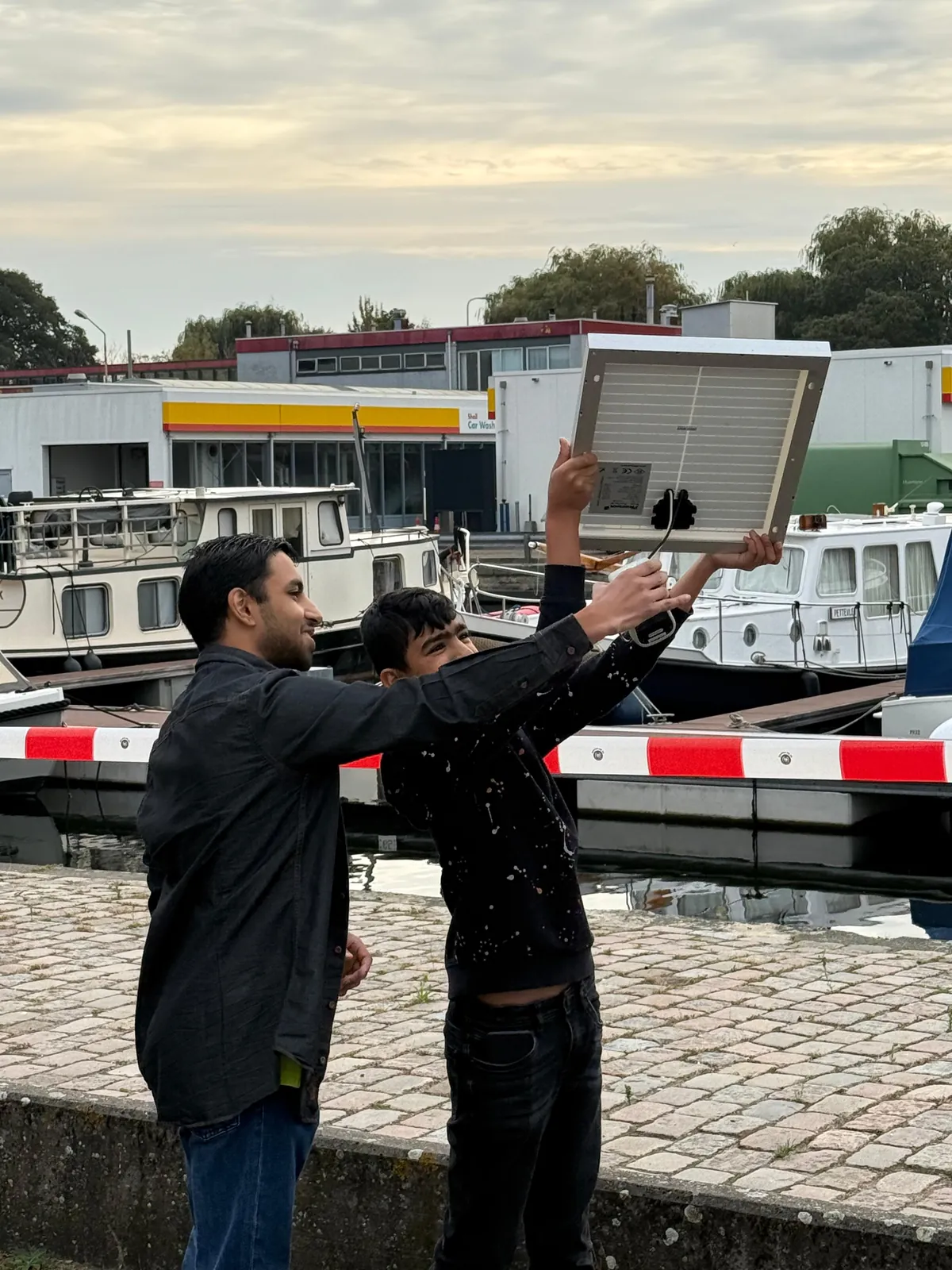
Children come to the TukTuk to learn how electrical engineering works. They play with solar panels and see for themselves what the sun does: turn the panel to the sun and it gives more power.
From the sun to the pan
- The solar panels on the sides make electricity through the day.
- The battery pack stores enough for up to three hours of cooking.
- The induction plate cooks on the stored energy.
- The other systems on board run on the same small DC grid.
- When
- 2020 to now
- Students
- Bastiaan Soeterbroek (3D model, 2020), David van Dalen (ECK project, 2020), Nico Hogervorst (full installation, 2025), Bart Slats (graduation, 2026)
- Paper
- A low voltage DC nanogrid for a self-sustainable tuk-tuk (ECOCITY 2021, David van Dalen)
Story
A kitchen that runs
on direct current
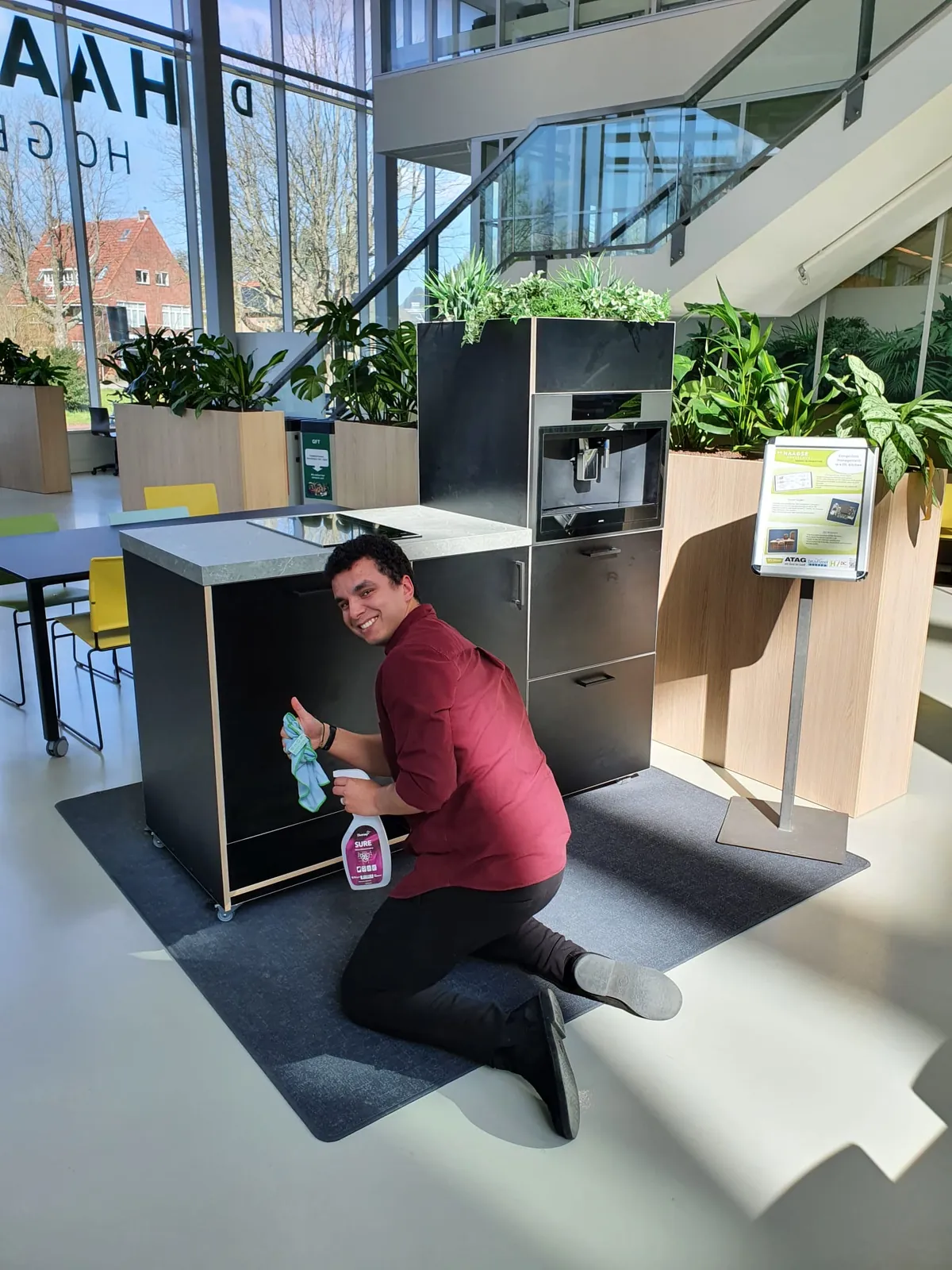
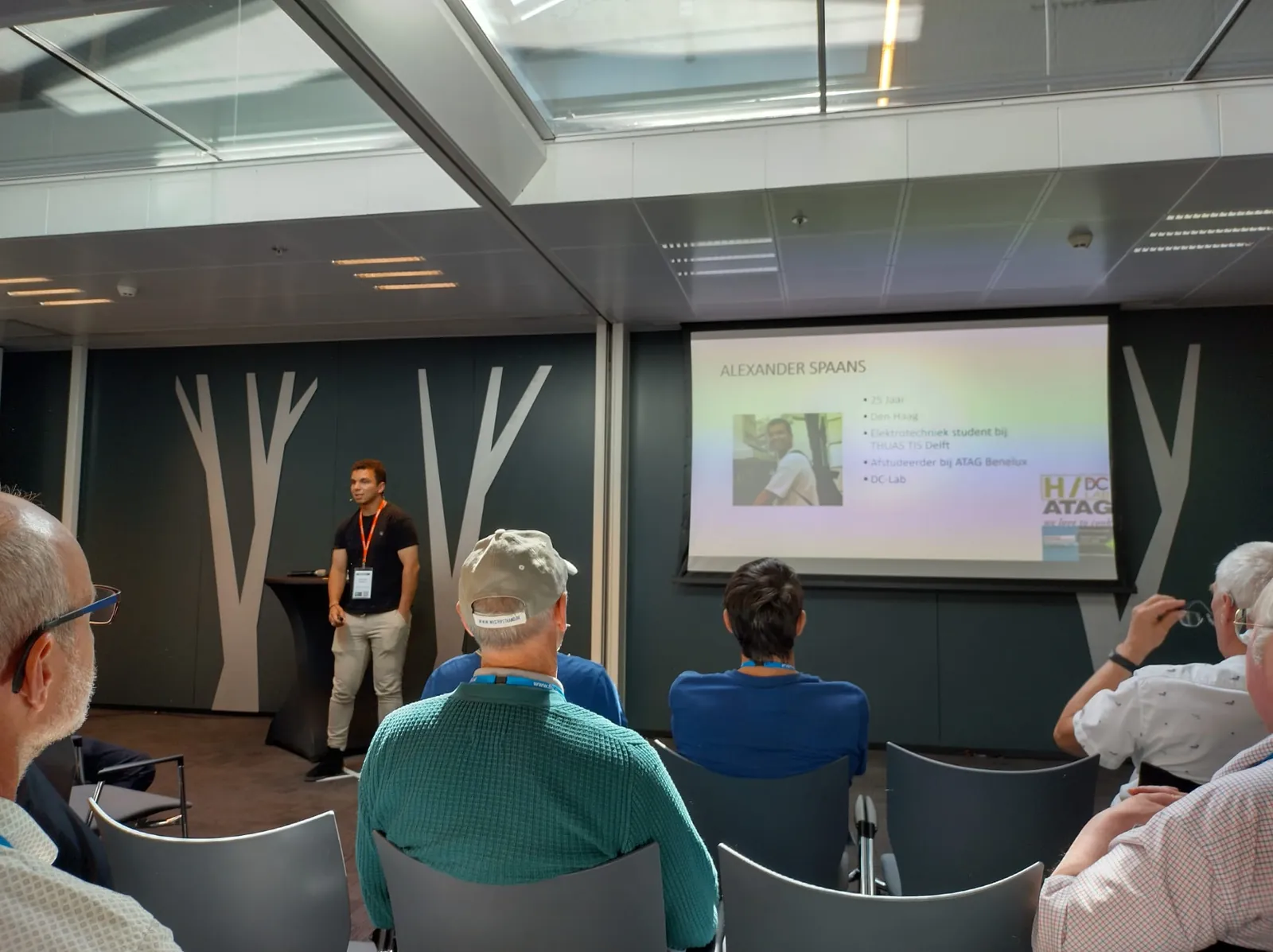
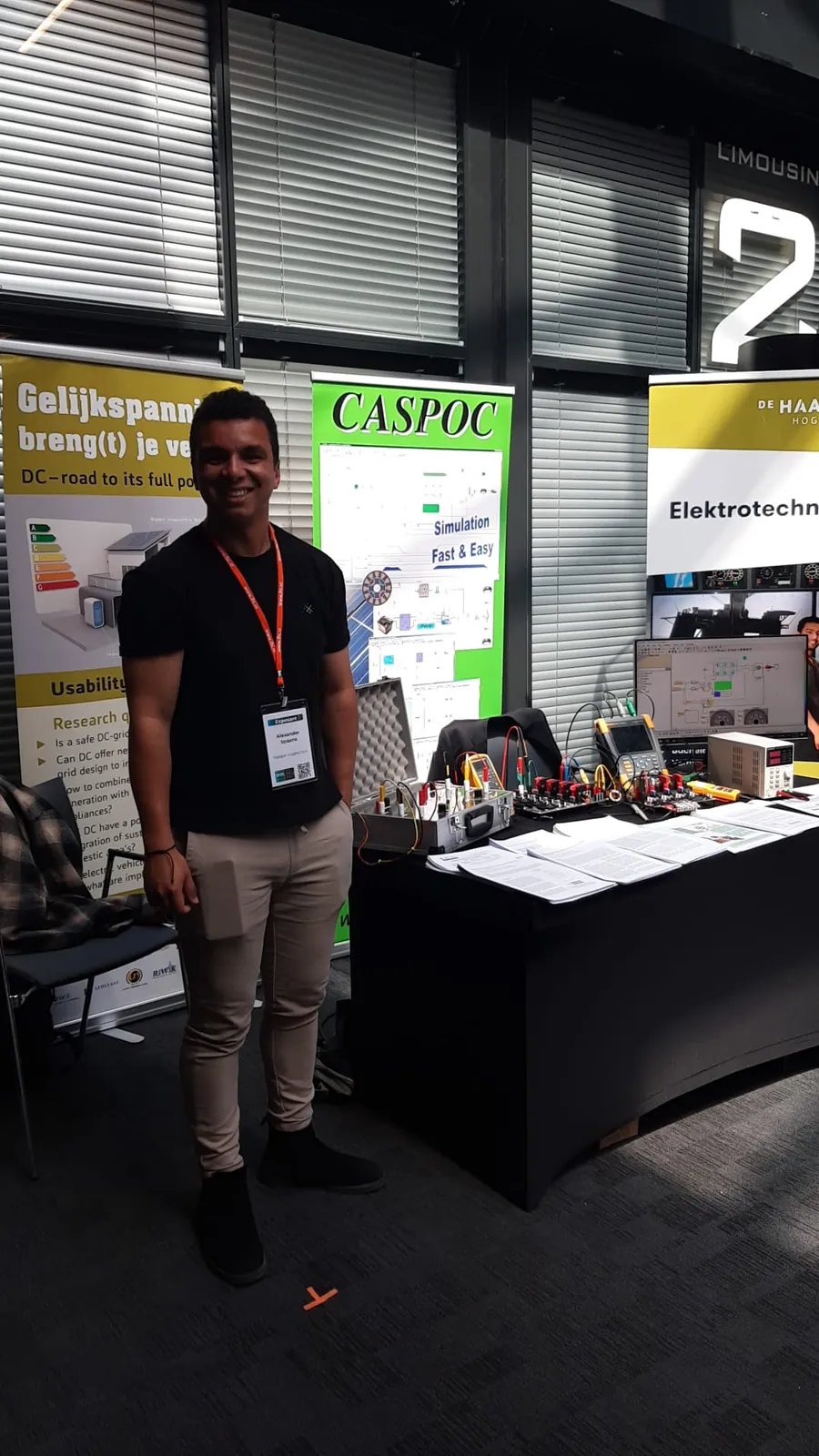
Can the appliances in a home work on direct current? The lab built a whole kitchen to find out.
The mobile DC kitchen was built with ATAG Benelux in the project DC Domestic Appliances, supported by RVO and other company partners. Around it students built their own parts: a DC coffee machine, a smart pan handle and a socket that lets old 230 V appliances run on 350 V DC.
The paper about the kitchen, “Requirements on Power Electronics for converting Kitchen Appliances from AC to DC”, won the Best Paper Award of the DUE conference in South Africa in 2019.
What students did with it
- Diëgo Zuidervliet graduated in 2018 on an induction hob that cooks on DC and won 3rd place in the E3 Royal SMIT Prize.
- Hugo van Essen made a coffee machine work on DC (2018), then built a current-limiting converter for it in his graduation (2019).
- Fedor Boendermaker and Timo Kerssens worked on the Legacy Socket for old appliances (2021).
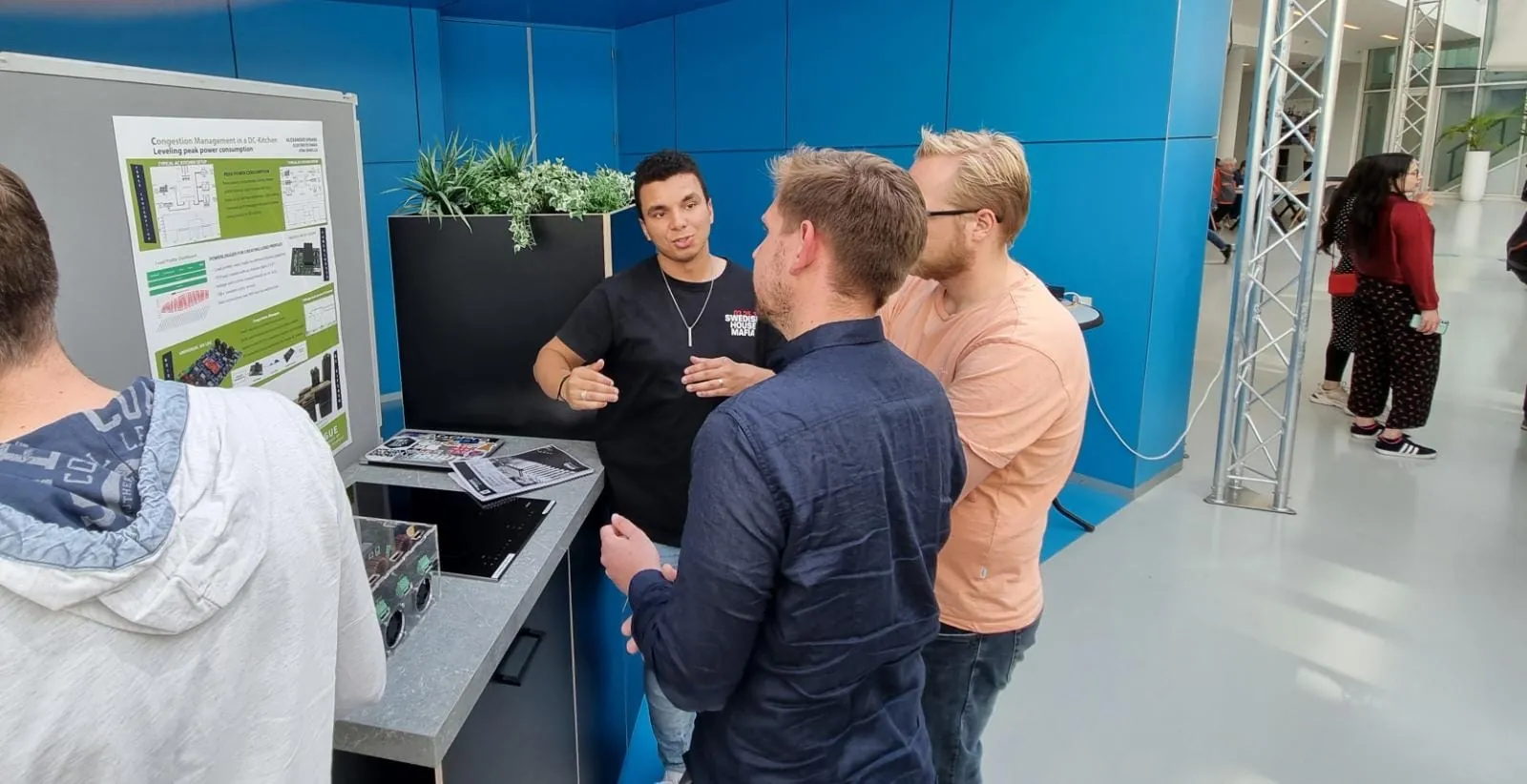
- Alexander Spaans graduated in 2022 on levelling the peak power of the kitchen. He wrote the paper “Droop Control in DC Grids for Kitchen Appliances to avoid Power Congestion” and won 3rd place in the E3 Royal SMIT Prize 2022.
- Xavier Kukler built a smart pan handle with wireless charging in two internships (2025 and 2026). It led to the paper “Auto-Resonant Wireless Charging for Kitchen Appliances” (SIELA 2026, Bulgaria).
Story
One idea,
three versions
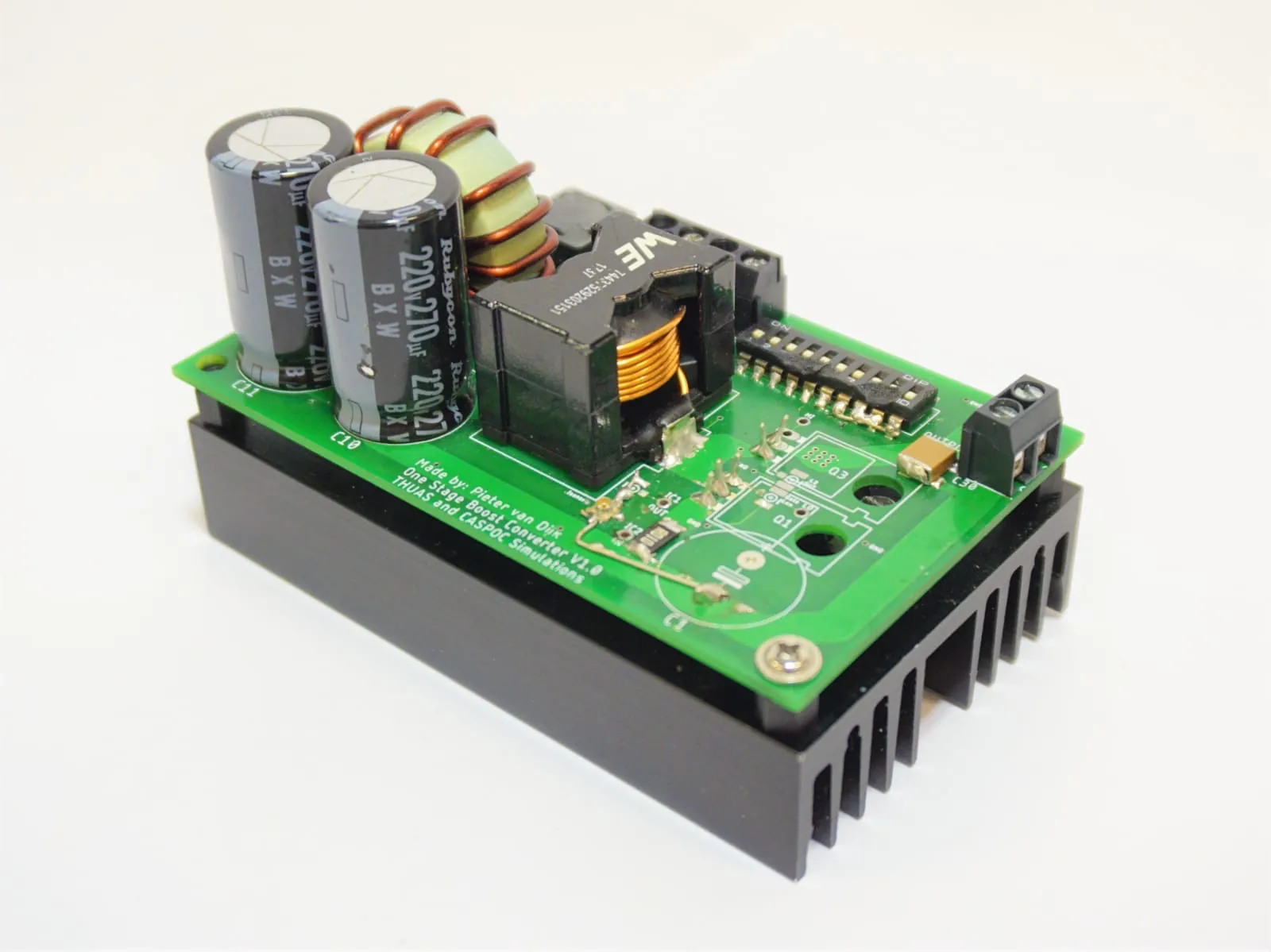
A vacuum cleaner is made for 230 V from the wall socket. The Current Limiter lets it run on a 350 V DC grid.
The Current Limiter is a converter that takes 350 V DC and limits the current, so that appliances made for alternating current keep working. Every new version was built by the next student, on top of the work of the one before.
- Version 1 (2017): Diëgo Zuidervliet made the first prototype. He designed and tested it at low voltage, on a motor with a ten times lower rating.
- Version 2 (2017): Brian Nanhekhan scaled it up ten times in his graduation, for a DC vacuum cleaner. He won 3rd place in the E3 Royal SMIT Prize 2017, the first student of the lab to win it.
- Version 3 (2018): Casper Grootes built the latest version, one board on a heat sink. Pieter van Dijk did a small part in his internship.
This is how the lab works: a project does not end with one student. The next one picks it up and builds the next version.
- When
- 2017 to 2018
- Papers
- DC — Readiness of a vacuum cleaner (DUE 2018) and Brushed universal motor controller for DC-grids (REM 2018), both by Brian Nanhekhan; Switching Power Supplies in DC Grids: The Smart Current Limiter (AIUE 2021, Casper Grootes)
Every project of the lab
These were three of the 35 projects on this site, from 2017 to 2026. The big projects hold 76 more parts. See them all, and filter by kind, year or research area.
Want your own project here? See the ways to join