
On tour
Trips, visits and collaborations abroad, newest first: who went, what they saw and who the lab worked with.
Where the lab has been
Trips, visits and papers presented abroad. Press a pin to see what happened there; every place is also listed under the map.
The lab in Delft A place the lab visited or presented a paper; the number is how many
Every place
South Africa
-
DC Power Lab On Tour: South Africa
South Africa
-
Visit to Tshwane University of Technology (TUT)
Pretoria, South Africa
-
Visit to the Energy Institute of Cape Peninsula University of Technology (CPUT)
Cape Town, South Africa
-
Aquaponics farm of local farmers
South Africa
-
Requirements on Power Electronics for converting Kitchen Appliances from AC to DC
South Africa (city not listed)
-
DC grid laboratory experimental setup
South Africa (city not listed)
-
DC — Readiness of a vacuum cleaner
South Africa (city not listed)
-
Second step to full DC-potential: DC grid efficiency for Home Owners Associations
South Africa (city not listed)
DC Power Lab On Tour: South Africa
2019 · Pretoria and Cape Town
In 2019 Diëgo Zuidervliet and Johan Woudstra travelled to South Africa to meet universities and local initiatives. In Pretoria they visited Tshwane University of Technology (TUT); in Cape Town they met the Energy Institute of Cape Peninsula University of Technology (CPUT).
On this trip the lab’s paper “Requirements on Power Electronics for converting Kitchen Appliances from AC to DC”, by Peter van Duijsen, Johan Woudstra and Diëgo Zuidervliet, was presented at DUE, the conference on the Domestic Use of Energy.
- When
- 2019
- Who went
- Diëgo Zuidervliet, Johan Woudstra
- Places
- Pretoria, Cape Town
The visits
-
Tshwane University of Technology (TUT)
A visit to Tshwane University of Technology in Pretoria.
-
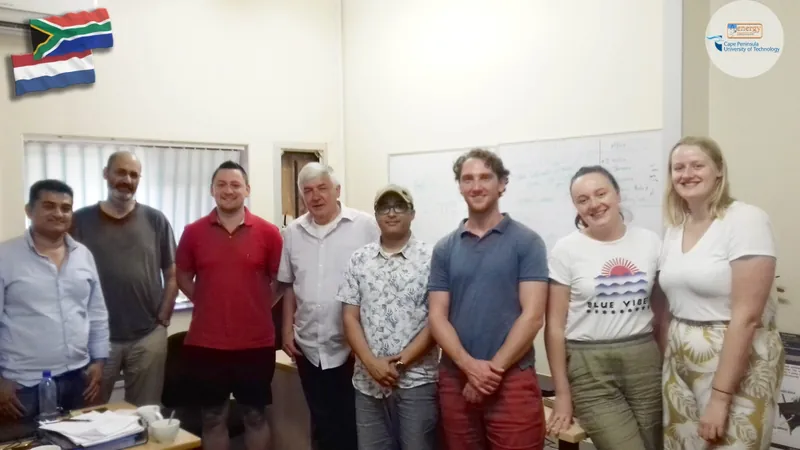
Energy Institute, Cape Peninsula University of Technology (CPUT)
A meeting at the Energy Institute of CPUT; its logo is on the meeting photo above.
-
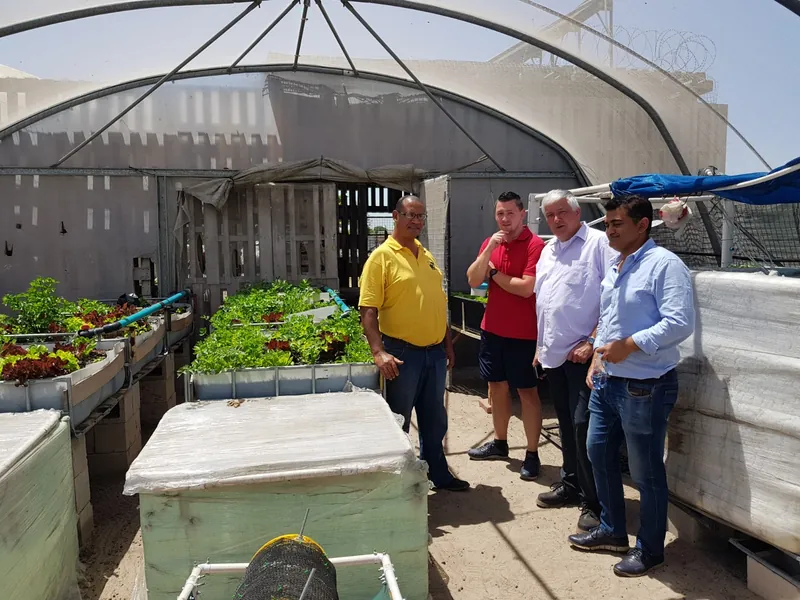
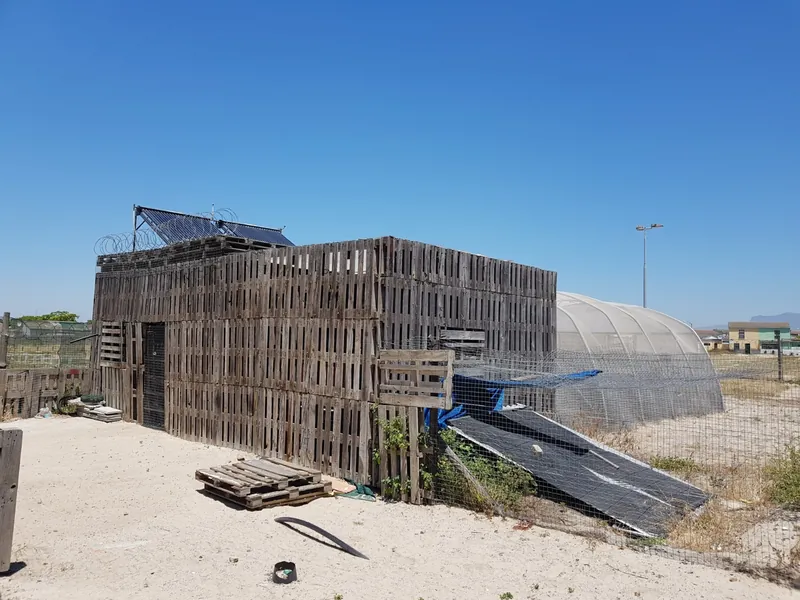
An aquaponics farm of local farmers
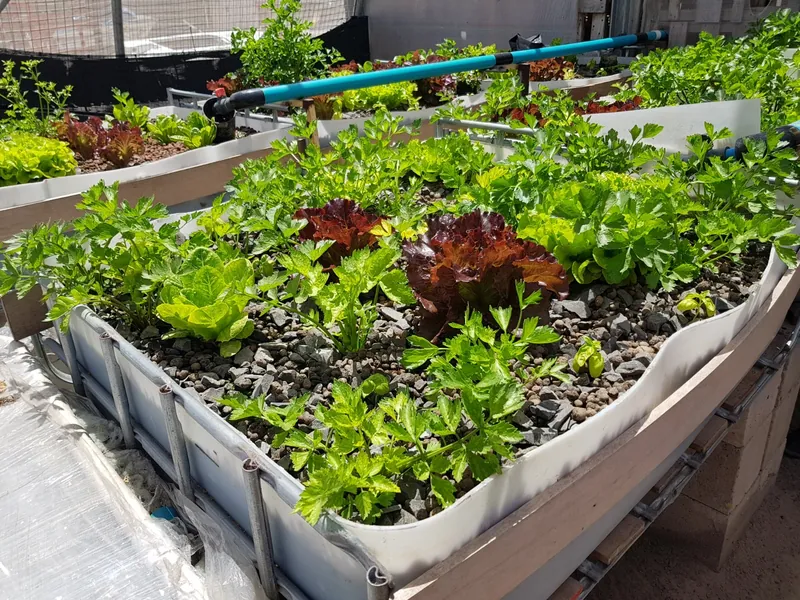
The farm has a shed built from pallets, with solar water heaters (evacuated tubes) on the roof that, as far as we know, keep the fish water warm. Next to it stands a greenhouse where plants such as lettuce and celery grow in beds fed by the fish water. Dutch students were already working on local projects.
How aquaponics works
The fish
Fish produce waste water that contains ammonia.
The bacteria
Bacteria in the grow beds turn the ammonia into nitrate.
The plants
The plants take up the nitrate as nutrients and so clean the water.
Back to the fish
The clean water flows back to the fish. A pump keeps the water moving.